
Planes
Not the flying kind, or the flattening tool kind, but about movement.

Also, Amygdala. Again.
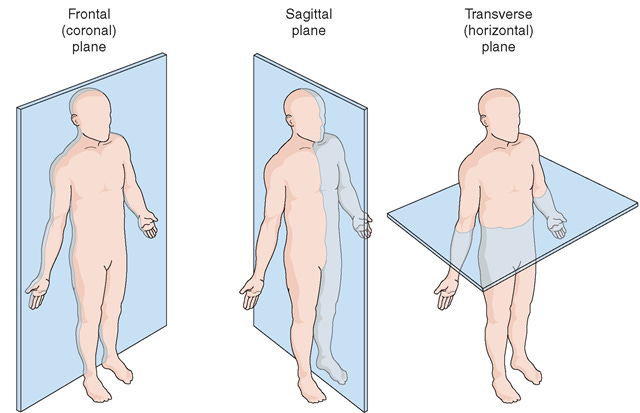
→ I don’t remember from where online I yoinked this image. I was going to use it as a visual aid for my workshop only, so. /shrug/ ←
~
I was all set to teach a body language seminar to a group of around 120 (!) businesspeople for Boulder Startup Week this past Wednesday. However, if you know anything about what the weather was doing in Colorado on that day, well. Let’s just say I was forced to call in a snow day. (No really, it’s a thing here in May—it was a serious blizzard. And now all of it’s melted away and it’s 70 degrees. That’s this climate for ya.)
And so I thought it’d be fun to explain what I always do for the opening exercise in movement workshops like this, whether it’s for theatre students, public speakers, mimes & clowns, or businessfolk. It has to do with posture and status.
We begin by the whole class taking a walk around the room (how that would’ve worked with a hundred people crammed into a conference room, I honestly don’t know, but. That point is moot). I encourage everyone to put their feet on all floor surfaces they can safely, and to avoid touching anybody or anything, and sometimes I’ll play a game called Crazy 8s first, for spatial awareness. But for a shorter seminar, I start right away with the planes of movement.
What I do while the walkers are walking is, I’ll take a moment and stand aside to observe. I’m looking for three different things, and I look for them one after the other. When I’m looking for the first thing, I’ll tap those on the shoulder that are displaying it, and have them stand aside for a moment. Then I’ll let them back in the group and look for the next thing, and do the same. I do this three times, for the three things, and it’s fun to watch those I take aside as they look at their fellow students, wondering what on earth I saw that set them apart.
After the three groups are found, I have only the first group go out and walk naturally, and we’ll all look at them walk. Then I bring them back aside and have only the second group walk as we watch, etc. I don’t explain what they’re seeing just yet—but sometimes the observers get pretty close. And of course the jokes begin, a-la: “Go ahead and walk totally naturally; don’t worry that we’re all staring at you, just walk totally naturally and relaxed.”
Then, I’ll have them all rest for just a minute and sip water as I explain the above image. It represents the planes of the body, and in the case of this course, it’s the planes of movement of the body specifically.
I don’t usually use the medical/scientific terms for these, as they’re complex-sounding for laypeople and aren’t relevant to our work at any rate. The frontal plane I call up-and-down; the sagittal for our purposes is front-to-back; and the transverse plane we call side-to-side. Because that’s how the movement looks, and each person will favor one of those planes naturally as they walk without thinking about it.
And that’s what those three groups were all about: I watch them walk and pick out the ones that have a natural up-and-down bounce to their gait, or those that sway their hips or shoulders side-to-side as they walk. The front-to-back walkers are a little trickier to see, as they look more like a gliding walk that stays on one line and level. I ask the whole group to imagine as they walk, not a glass plane like what’s in the anatomy image, but a pole instead. The up-and-down-ers are like a carousel horse: they bob up and down their vertical pole as they walk forward. The front-to-back-ers are sliding along a horizontal pole going through their navel, like a bead on a wire (this can help them visualize this movement a bit easier). And the side-to-side-ers have their pole through their hips horizontally, like a foosball guy.
What I’ll do to conclude this exercise is: I’ll then have Group 1 (up-and-down) go out and walk naturally (which often they can’t do anymore since they’re thinking about it), have the rest of the group see what I mean for a second, and then I have the rest of the group go out and try an up-and-down walk. See how it feels, see how it shifts the emotions, see if it hurts or hinders a walker if it’s not their norm. Then I’ll do the same with Group 2 (front-to-back) and Group 3 (side-to-side). We’ll discuss how these different planes of movement feel, and how they think any certain type of walk presents itself to observers (like: what kind of an impression does a person make with a bounce in their step, or a sway, or a level glide?) and they consider what sorts of movements they naturally do that they’ve never noticed.
After that we usually do the exercise where we practice leading our walk with different body parts, but that’s a whole ‘nother essay. That one is great right after this, in that now we can start to get different characters when we change these things. The third in this walking trilogy is the Lessac energy dynamics, which are: buoyancy, radiancy, and potency.1 But again, that’s a whole ‘nother thing.
There you have it! The first part of my body language movement seminar! I know you can’t really get a total feel for it without actually moving, but I hope this was a cool window into what I do anyway. And hey, maybe you can get paranoid about your walk and not be able to unsee the planes of movement now too! Yer welcome.
For relevant fun, here’s an oldie but a goodie about me teaching body language to businessfolks, and how cool the study of movement is:
I know, I know, there’s another one called inter-involvement, but I don’t tend to use that one, for reasons. Ask me if you’re curious why.